

Connecting
global markets.
Creating value.
Global Path is an international physical commodities business, connecting producers and suppliers with buyers across global markets.
Our Markets
01. Source
Origination, sourcing
and procurement

02. Trade
Physical commodity
buying and selling

03. Finance
Trade, commodity and
working capital solutions

04. Hedge
Commodity price risk
management

05. Move
Logistics, storage and
supply chain coordination

06. Deliver
Execution through
to final delivery
Essential
commodities for a
growing world.
We trade across key global commodity markets, with a focus on agriculture & food, metals & minerals and energy. Our diversified offering and global reach create resilience and opportunity across cycles.
Explore Markets
Agriculture & Food
Sugar, rice, grains, oilseeds, beef, poultry, livestock and more.
→
Metals & Minerals
Copper, aluminium, zinc, nickel, lithium, iron ore and more.
→
Energy
Oil, gas, LNG, LPG, coal and refined petroleum products.
→
End-to-end
commodity
solutions.
We bring together physical markets, global relationships and deep sector expertise to deliver value across the entire commodity value chain.
Discuss Your Requirements
Physical Commodity Trading
Buying and selling physical commodities across global markets.

Origination & Sourcing
Access to reliable producers and supply sources worldwide.

Procurement & Supply
End-to-end procurement and supply solutions.

Commodity Risk Management & Hedging
Managing price risk and protecting commercial outcomes.

Offtake & Supply Agreements
Structuring long-term commercial supply arrangements.

Trade Structuring
Tailored commercial, logistical and financial structuring.

Commodity & Trade Finance
Working capital and financing solutions for physical trade.

Logistics & Transportation
Coordinating global logistics and transportation solutions.

Storage & Distribution
Reliable storage, warehousing and distribution networks.

International Marketing
Connecting global buyers and sellers across key markets.

Market Intelligence
Insights and data to inform commercial decisions.

Supply Chain Management
Integrated supply chain solutions from origin to delivery.
Commodity
Trading &
Risk Management
One integrated strategy.
Commodity markets can expose producers, suppliers, processors, manufacturers, importers and buyers to significant movements in price, currency and supply.
Global Path Commodities works with clients and counterparties to understand their physical commodity requirements and develop commercial strategies across procurement, physical trading, pricing, supply and commodity risk management.
Our approach recognises that buying or selling the physical commodity is only one part of the transaction.
Price exposure, timing, currency, logistics, financing and contractual structure can materially affect the ultimate commercial outcome.
Connecting physical
supply with global
demand.
Global Path Commodities facilitates the buying, selling, sourcing and supply of physical commodities across international markets.
Our activities can include:
- Physical commodity purchases
- Physical commodity sales
- International sourcing
- Procurement
- International marketing
- Offtake arrangements
- Supply agreements
- Forward physical contracts
- Import and export transactions
- Logistics coordination
- Trade and commodity finance

The right commodity.
The right source.
The right commercial
structure.
Global Path works with buyers to understand their physical commodity requirements and identify appropriate sources of supply.
A physical commodity transaction can involve consideration of:
Our objective is to bring together the commercial and operational components required to create an executable physical transaction.
Commodity
Risk Management
Protecting commercial outcomes.
Commodity prices can move materially between the time a business purchases, produces, processes or contracts a commodity and the time the underlying transaction is completed.
Global Path works with clients to identify commodity price exposures and consider appropriate commercial risk-management strategies.
The objective of commodity risk management is not to speculate on market direction.
It is to help businesses understand and manage the potential impact of adverse price movements on commercial outcomes.


Revenue
Protecting selling prices and revenue streams.

Input Costs
Managing rising input costs and margin pressure.

Gross Margins
Reducing margin volatility and earnings risk.

Inventory Values
Managing inventory value and holding risk.

Contract Profitability
Supporting more consistent commercial performance.

Cash Flow
Improving cash-flow visibility and stability.

Budgets
Helping to create greater budget certainty.

Supply Requirements
Supporting supply security and continuity.
Greater certainty
in volatile
commodity markets.
A properly structured hedging strategy can help a business reduce its exposure to adverse commodity price movements and create greater certainty around future costs, revenues and margins.
Depending on the underlying exposure, potential strategies may include physical forwards, futures, options, swaps, OTC structures and other pricing solutions.
The appropriate strategy depends on the underlying physical exposure, timing, commodity, risk tolerance and commercial objective.


Physical
Forwards

Futures

Options

Swaps

OTC

Fixed Price

Floating Price

Structured
Pricing
Secure revenue.
Build resilience.
Producers, suppliers and commodity owners may be exposed to the risk that market prices fall between production, contracting and final sale.
An appropriately structured hedging strategy may help establish greater certainty around future selling prices and protect commercial margins against adverse market movements.
- Managing the risk of falling commodity prices
- Greater certainty around future revenue
- Improved visibility for budgeting and planning
- Protection of commercial margins

Capture tomorrow.
Manage costs.
Protect margins.
Manufacturers, processors, importers and other commodity users may be exposed to increasing input costs.
An appropriately structured hedging strategy may help provide greater certainty around future purchase prices and protect operating margins.
- Managing the risk of rising commodity prices
- Greater certainty around future input costs
- Improved cost and cash-flow planning
- Protection of operating margins

Create opportunity.
Six-step Hedging
Process.
Our structured approach helps clients move from identifying their commercial exposures to implementing and managing hedging strategies that align with their operational and financial objectives.
We work closely with clients at every stage, combining market insight, commercial experience and disciplined risk management.

Physical Exposure
Understand your physical commodity flows, volumes, timing and commercial exposures.

Identify Risk
Assess price, currency, basis, timing and other risks that could impact your commercial outcomes.

Develop Strategy
Design a hedging strategy tailored to your objectives, risk appetite and operational requirements.

Hedge / Structure
Implement the strategy using appropriate instruments and commercial structures.

Monitor
Track positions, market developments and performance against your commercial objectives.

Execute
Close out or roll positions in line with your physical transactions and ongoing risk-management requirements.

Different tools.
A more resilient tomorrow.
We use a range of hedging instruments and structures to help clients manage commodity price risk.
The most appropriate instrument will depend on the commodity, underlying exposure, risk profile, commercial objectives and operational requirements.
Futures
Futures are standardised contracts traded on regulated exchanges, allowing businesses to manage future commodity price exposure through transparent and liquid markets.

Options
Options provide the right, but not the obligation, to transact at predetermined pricing terms, giving businesses flexibility while helping protect against adverse price movements.

OTC
OTC structures can be tailored with counterparties to reflect specific commodities, timing, volumes and commercial requirements, subject to appropriate market counterparties and documentation.

Physical Contracts
Physical contracts, including fixed-price and formula-based arrangements, can form part of a broader strategy for managing commodity price exposure alongside physical supply requirements.

The right instrument. The right structure. A more resilient business.
Connecting markets.
Delivering opportunity.
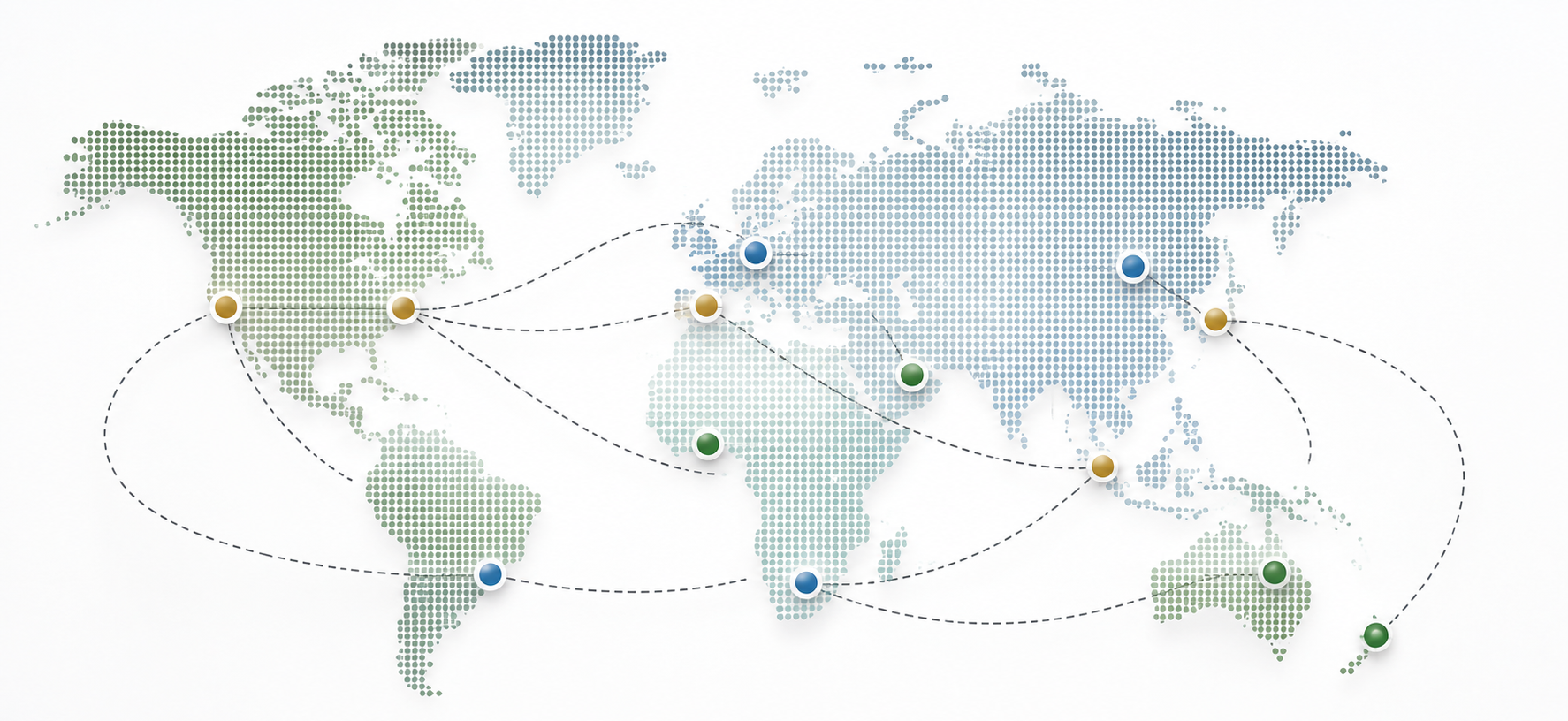
Our global relationships provide access to key producing regions, destination markets and international commodity flows worldwide.
Partnerships that
move the world.
We partner with a diverse range of counterparties to create value across global commodity markets.

Producers & Suppliers
Access international markets and build long-term offtake relationships.
→
Buyers
Source reliable supply from trusted producers around the world.
→
Trading Partners
Collaborate on physical commodity transactions and opportunities.
→
Capital & Finance Partners
Support trade finance and structured commodity transactions.
→
Logistics & Supply Chain Partners
Work with us across shipping, storage, inspection and transportation.
→Key markets. Global opportunity.
We operate across major global commodity markets, with the scale and connectivity to create value for producers, buyers and end users.

Copper
Metals & Minerals
→
Iron Ore
Metals & Minerals
→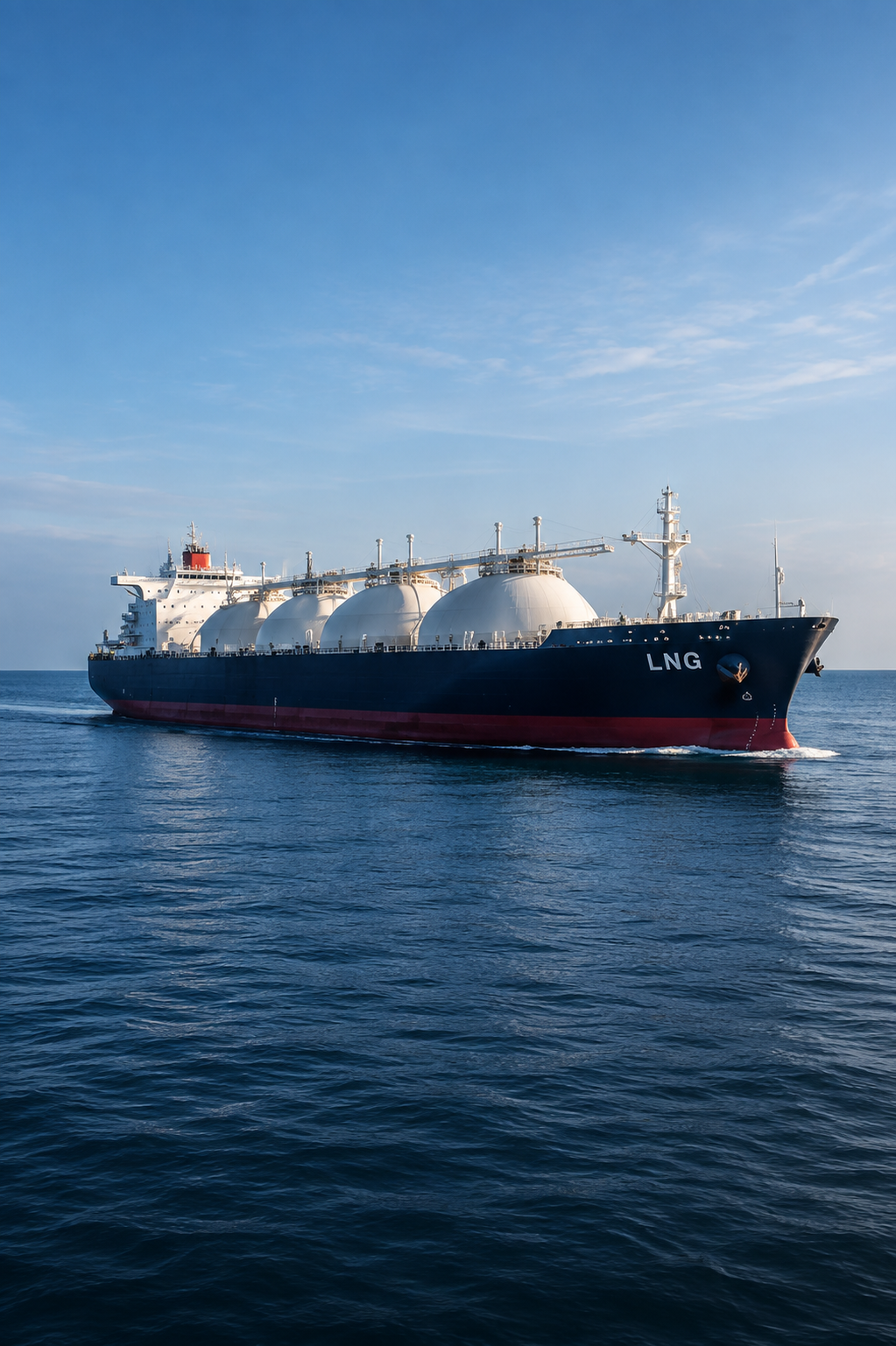
LNG
Energy
→
Sugar
Agriculture & Food
→
Crude Oil
Energy
→
Grains
Agriculture & Food
→